

The most desirable suburbs in metro Atlanta are usually found north of the city, but “North Atlanta” covers a massive area. You have Cobb, Cherokee, Forsyth, Fulton, Gwinnett, and DeKalb counties, each with totally different commutes, schools, prices, housing types, and lifestyles.
The goal is not to search every neighborhood north of Atlanta. The goal is to narrow the map down to the few places that actually fit your family, your budget, and your day-to-day life.
Start With the Map: ITP, OTP, Commutes, and Traffic
Atlanta’s perimeter is Interstate 285, often called simply “the Perimeter.” Locally, areas are described as either ITP, meaning inside the Perimeter, or OTP, meaning outside the Perimeter.
Most North Atlanta suburbs are OTP, although places such as Sandy Springs sit right along the edge and extend inside the Perimeter in some areas. Major routes include I-75 from the northwest, I-85 from the northeast, Georgia 400 coming down from North Fulton and Forsyth County, and I-20 crossing the metro area east to west.
That geography matters because Atlanta traffic tends to pile up at major interstate junctions. Hartsfield-Jackson Atlanta International Airport is south of the city, too, so frequent travelers should factor airport access into the home search.

Why the North Atlanta Suburbs Are So Popular
North Atlanta gets so much attention for a few simple reasons:
- More amenities: Walkable downtowns, restaurants, shopping, mixed-use developments, lakes, parks, and easy access to North Georgia.
- Strong public schools: On average, many of the top school systems in metro Atlanta are found north of the city.
- Jobs and development: This is one of the most developed parts of the metro, with major employment centers and continuing growth.
- Outdoor access: The farther north you go, the closer you are to Lake Allatoona, Lake Lanier, wineries, rivers, hiking, the Blue Ridge Mountains, and North Georgia in general.
That does not mean east, west, or south of Atlanta are bad options. There are plenty of fantastic places in every direction. But north of the city is usually the most researched and most requested area for people relocating to metro Atlanta.
The Four Questions That Narrow Down a Huge Home Search
Before falling in love with any one suburb, answer these four questions honestly:
- What is your commute? Consider work, school, family, or anywhere you visit regularly.
- What do you need from public schools? If schools are a major priority, you need to focus on the exact attendance zone, not just the city name on an address.
- What home do you need for your budget? Size, condition, lot size, updates, and whether you are open to a townhome all matter.
- What lifestyle do you want? Do you want city convenience, a historic downtown, lake access, restaurants, land, a family-oriented community, or a slower country atmosphere?
A quick property search using your actual maximum budget and minimum home requirements can save a lot of time. For example, a search around $500,000 for at least four bedrooms, two bathrooms, and 2,000 square feet will quickly show that certain areas, including Alpharetta, Roswell, and East Cobb, may not offer much inventory that fits those criteria.
Do not waste your time shopping neighborhoods that cannot deliver the kind of home you need.
Cobb County: Smyrna, Marietta, Kennesaw, Acworth, and East Cobb
Smyrna: Close to the City With a Younger, More Active Feel
Smyrna is just outside the Perimeter, which makes it a strong option for someone who needs to get into Atlanta regularly but does not want to live ITP. It tends to appeal to a slightly younger crowd looking for affordability, proximity, and plenty of things to do.
The Battery Atlanta, home of the Atlanta Braves, is the major attraction. Beyond baseball, it brings restaurants, shopping, events, and entertainment. Smyrna also makes it easy to enjoy the Upper Westside and other parts of Atlanta without having a brutal trip home afterward.
Smyrna does not have the classic historic walkable downtown that some other suburbs have, but it is booming and development continues to come in.
- Move-in-ready townhomes can begin in the mid to high $200,000s.
- A detached starter home typically starts in the mid $300,000s.
- School assignments are not as consistently strong as in some other North Atlanta locations, but they are not bad by any means.

Marietta: Historic Downtown and a More Manageable Commute
Marietta is a fantastic family option for someone who wants a real suburban atmosphere without paying Alpharetta pricing. Its historic, walkable downtown has a great feel, and commuting into Atlanta is often easier than coming down the Georgia 400 corridor.
One important detail: a Marietta address does not automatically mean you are in the City of Marietta school district. Large portions of Cobb County are unincorporated, and the school assignment can differ substantially depending on the exact address.
- Detached starter homes generally begin in the low $400,000s.
- Expect to move into the high $400,000s or low $500,000s for more upgrades and higher-end finishes.
- Marietta is a good fit for families who want downtown character, suburban living, and less traffic than some northern alternatives.
Kennesaw: College Town Energy and Lake Allatoona Access
Kennesaw is farther from Atlanta, so commuting gets tougher, but it can still be workable even for a five-day schedule. Kennesaw State University gives the city a college-town feel, while its historic downtown and the Town Center area provide plenty of dining and shopping.
It is also close to Lake Allatoona, a major perk during warmer months. North Georgia outdoor access becomes more convenient as you head in this direction.
- Kennesaw has a good mix of attached and detached housing.
- Detached starter homes generally begin in the high $300,000s.
- A budget around $450,000 is a solid starting point for a detached starter home.

Acworth: A Lake City With a Smaller-Town Feel
Acworth is known as a lake city because of its proximity to both Lake Allatoona and Lake Acworth. If boating is part of the lifestyle you want, Acworth deserves consideration.
This is where the lifestyle starts to feel more small-town and somewhat more rural. You are still close enough to the city and nearby entertainment, but Acworth has more variation from one area to another than places such as Alpharetta or Johns Creek. Exact neighborhood selection matters here.

East Cobb: High-Performing Schools and Strong Resale Demand
East Cobb is one of the first places to consider if public school quality is at the top of your list and you still want a manageable trip into Atlanta. The schools have a reputation for being rigorous and high quality, and strong demand supports excellent resale value.
There is no traditional walkable downtown in East Cobb itself, but downtown Marietta, Sandy Springs, and Roswell are nearby. You will not run out of things to do, even if you need to leave the immediate area for them.
- A detached starter home budget generally begins in the mid $500,000s.
- East Cobb is a strong fit for buyers who prioritize schools, resale value, and access to Midtown or other intown employment centers.
- Commute timing matters. A strategic schedule can make a major difference, but rush hour is still rush hour.
Cherokee County: Woodstock and Canton
Cherokee County delivers more of the rural, country-suburban lifestyle that a lot of people are seeking. It has quality schools, cohesive school systems, and a growing population. It is also one of the fastest-growing counties in Georgia, alongside Forsyth County.
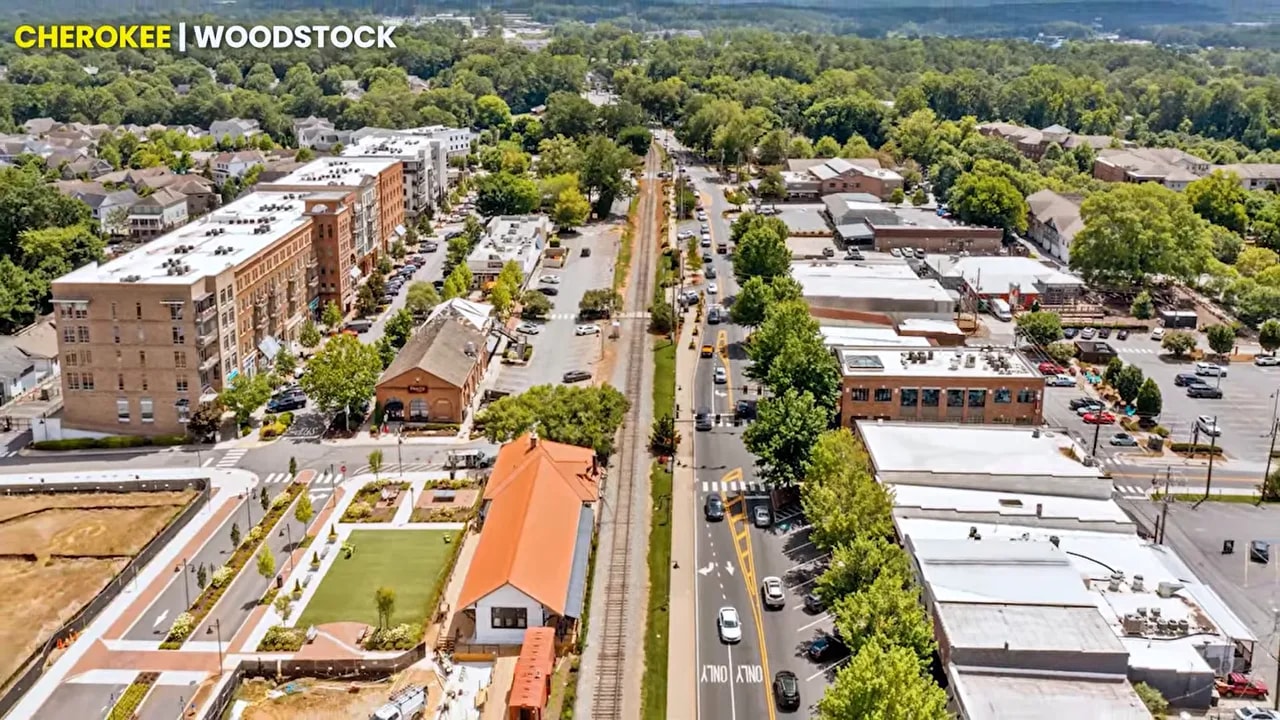
Woodstock: One of Metro Atlanta’s Best Downtowns
Woodstock has one of the best downtown areas in metro Atlanta. It is historic, quaint, walkable, and full of restaurants and retail. It works especially well for families who want a country-suburban lifestyle but still want activity and community close by.
The tradeoff is distance. Woodstock is not the place to choose if being very close to Atlanta is your number one priority. But if you want a little more breathing room without feeling isolated, it is a great fit.
- Fast growth has pushed real estate prices up substantially.
- Detached starter homes generally begin in the low $500,000s.
Canton: A Slower Pace Near the Edge of North Georgia
Canton is a different lifestyle. Once you are north of Canton, you are really entering North Georgia. You could commute to Atlanta from here, but it would not be a fun daily routine for most people.
Canton is for buyers who want a slower pace, more country atmosphere, and traditional Southern character. It still has a nice historic downtown with shops and restaurants, plus The Mill on Etowah, a redeveloped mill area centered around the Etowah River with modern-day shopping and amenities.
- The median sale price is roughly $430,000 to $460,000.
- There are starter-home options at lower price points, but choices become limited below the mid $300,000s.
Forsyth County and Cumming: Schools, Growth, Tech, and Lake Lanier
Forsyth County is one of the fastest-growing counties in Georgia, one of the wealthiest counties in the state, and home to a major concentration of tech talent. It is also consistently rated at or near the top for public school quality statewide.
Cumming is the central hub of the county, so everything tends to revolve around it. That means weekends can get busy, especially around shopping and local amenities. There is plenty of new construction and development, but it is not a low-cost market.
- Median sales prices in the Cumming area are roughly $550,000 to $580,000.
- Lake Lanier access is a huge advantage for boat owners and anyone who likes spending time on the water.
- Georgia 400 is the main route south, and it can produce serious traffic bottlenecks.
Cumming has a nice downtown and a small-town atmosphere. The further out you get from Atlanta, however, the less likely you are to have the same concentration of high-end dining found in Alpharetta, Duluth, or intown Atlanta. For buyers who want the country atmosphere, that is usually not a problem.

North Fulton: Milton, Alpharetta, Roswell, Sandy Springs, and Johns Creek
Milton: Equestrian Land and High-End Living
Milton is a wealthy, high-end community known for horse farms, large parcels, and equestrian-style living. It makes sense for buyers seeking acreage or land for agricultural purposes.
Milton is not cheap. Even a basic home without significant acreage can require a budget in the high $500,000s to low $600,000s. Once you start looking for one acre or more, prices rise substantially.
It does not have the traditional walkable downtown many people want, but Alpharetta is close by for shopping, dining, and entertainment.
Alpharetta: The Full Package for Amenities
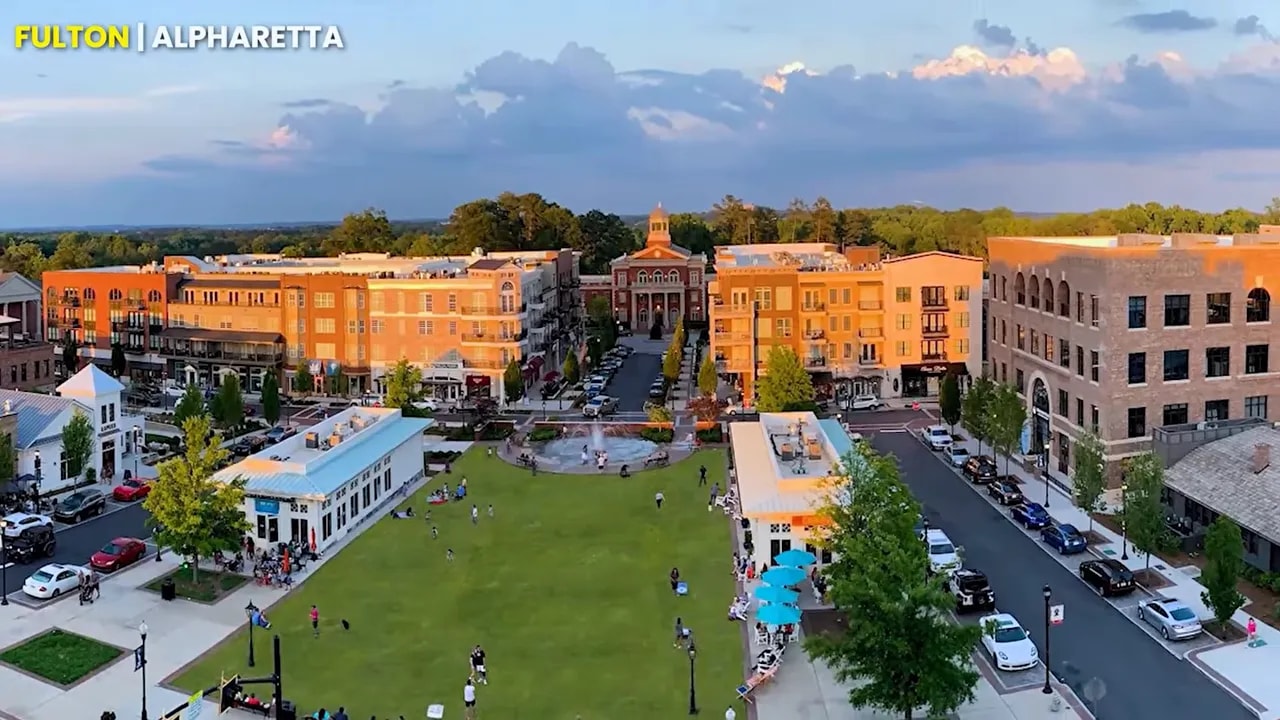
Alpharetta is one of the most talked-about suburbs in all of metro Atlanta because it combines location, schools, amenities, development, and outdoor access better than almost anywhere else.
It has a large, walkable downtown with restaurants and shopping, plus Avalon, a major mixed-use destination with more retail, restaurants, entertainment, and a movie theater. The AlphaLoop connects these areas, increasing local connectivity and convenience.
Alpharetta is positioned well for access to Lake Lanier and North Georgia while remaining within a reasonable commute of Atlanta for many people. It also has high-quality public school assignments throughout much of the area.
- Attached homes can sometimes be found in the high $300,000s.
- A more traditional detached home generally starts in the mid $500,000s.
- Higher-end homes can run well into the millions.
Roswell: River Access, Historic Charm, and Serious Traffic
Roswell is one of my favorite North Atlanta suburbs for atmosphere. The Chattahoochee River National Recreation Area is a major part of life here, and Roswell has a historic, quaint downtown with strong restaurant options.
The major caution is traffic. The Georgia 400 corridor can be treacherous, and traffic inside Roswell can also get very heavy. If you work typical business hours and want to avoid driving stress, spend time here during your actual commute window before purchasing.
- Attached starter options begin in the high $400,000s.
- Renovated detached homes with modern updates often start in the low $600,000s.
- Townhomes can still be found in the low $300,000s for buyers who need a lower entry point.
Sandy Springs: City Access, MARTA, and Healthcare Jobs
Sandy Springs is right along the Perimeter, making it a great choice for buyers who need close access to Atlanta but do not want to live in the center of the city. It has everything nearby, including major shopping, Whole Foods, Trader Joe’s, restaurants, and service amenities.
It is not a historic, walkable downtown in the same way as Roswell or Alpharetta. The lifestyle is more about convenience, connectivity, and access.
Sandy Springs also benefits from MARTA rail access. The train can take you south through Midtown and all the way to the airport, which is one of the best ways to avoid airport parking and rideshare costs when traveling.
Healthcare professionals should pay close attention to Sandy Springs. The area known as Pill Hill includes three major hospitals and thousands of medical offices, creating a major employment center for healthcare careers.
- Move-in-ready detached homes generally start in the low $500,000s.
- There are more affordable townhome and attached options.
- Traffic can be among the worst in metro Atlanta, despite the excellent location.
Johns Creek: Diversity, Schools, and North Fulton Convenience
Johns Creek is one of the more diverse North Atlanta suburbs, with a large and growing Asian American population. It tends to appeal to an older crowd more than a young couple looking for a lively downtown scene, although development is continuing.
It does not have the sprawling downtown of Alpharetta, but it benefits from being right next door to Alpharetta’s amenities. It is also within reasonable commuting distance of Atlanta for people who need to get inside the Perimeter regularly.
- Move-in-ready starter homes generally begin in the mid $500,000s.
- It is typically somewhat less expensive than Alpharetta, but it is still not a budget market.
|
Gwinnett County: Diversity, Schools, Parks, and Value
Gwinnett County is one of the most diverse counties in the Southeast and the country. If diversity is a major priority, Gwinnett should be one of the first counties on your list.
It is also known for quality public schools, particularly STEM-focused programs, special-needs support, and strong youth sports. As always, school assignments can vary by exact address, so do not rely on the city name alone.
Buford: Top Schools and Lake Lanier Proximity
Buford sits near Lake Lanier, making it attractive for boat owners and people who want lake access. It is far for a daily Atlanta commute, though not impossible. This is more of a fit for someone who does not need to be close to the city every day.
Buford City Schools are routinely among the highest-ranked school systems in Georgia. But pay attention: those school assignments apply only within the actual City of Buford limits. A Buford mailing address outside the city limits may be assigned to a different system.
Beyond Lake Lanier, the Mall of Georgia is the major commercial amenity, and Buford also has a nice historic downtown.
- Detached homes in the City of Buford generally start in the low $500,000s.
- This is an excellent option for families prioritizing top schools and access to the lake.

Suwanee: One of the Most Family-Oriented Suburbs
Suwanee is one of the most family-focused suburbs in metro Atlanta. Its downtown includes an amphitheater, splash pad, green spaces, and development that feels designed around families and kid-friendly activities.
It provides a good balance. You have suburban convenience without feeling like you are in the middle of nowhere. You can head into Atlanta for a date night, travel west to Alpharetta for more upscale dining, or head south toward Duluth for an incredible food scene.
- Suwanee is more affordable than Johns Creek and Alpharetta, but it is still not cheap.
- Starter home budgets generally begin in the high $400,000s and are often closer to the low $500,000s for move-in-ready homes.

Duluth: One of Metro Atlanta’s Best Food Scenes
Duluth consistently belongs in the conversation for top suburbs in metro Atlanta, especially if food matters to you. It has a large Asian American population and some of the best authentic Asian food in the metro, well beyond the typical corporate chain experience.
Downtown Duluth is growing quickly and has a really cool atmosphere. The southern part of Gwinnett is denser, including Duluth, Peachtree Corners, and Norcross, so attached housing is more common and homes tend to sit closer together.
- Smaller townhomes can be found in the high $200,000s to low $300,000s.
- Detached starter homes generally begin in the low $500,000s.
- This is not the first place to look if you need a half-acre or more.

Lawrenceville: Growth, Parks, and Stronger Value
Lawrenceville offers some of the better value among the North Atlanta suburbs. It is the largest city in Gwinnett County, diverse, busy, and growing rapidly. The downtown has quality shopping and amenities, while Gwinnett’s park system provides green spaces and outdoor opportunities.
The major drawback is traffic. It can be intense during a commute and around Lawrenceville itself. But your dollar can still go farther here than it will in many other suburbs discussed in this guide.
- Move-in-ready homes can sometimes be found in the high $300,000s.
- The mid $400,000s is a more comfortable range for buyers seeking stronger options.
Lilburn: An Under-the-Radar Value Play
Lilburn often flies under the radar, but it is worth considering for buyers who want a traditional suburb, diversity, parks, and a lower price point. The area has a large Latin American population, plenty of green space, and a small walkable downtown.
You will not find the same volume of immediate amenities as in Alpharetta or Duluth, but it has good access to Atlanta and Lawrenceville. It can also provide one of the easier suburban commutes into the city.
- Homes can still be found in the high $300,000s to low $400,000s.
- Lilburn is a smart place to look for buyers who need suburban space and city access without stretching into a higher-priced North Fulton market.
Peachtree Corners and Norcross: Close-In Value With More Variation
Peachtree Corners and Norcross are worth grouping together because both offer close proximity to Atlanta, good attached-home options, and stronger value than many of the more heavily discussed suburbs.
There is more variation here in school assignments, income levels, and crime than in places such as Alpharetta. That does not mean these are areas to dismiss. It means you need to pay closer attention to the exact neighborhood and the exact property.
- Townhomes can be available in the mid $200,000s.
- Detached starter homes can often be found in the mid to high $300,000s.
- These are excellent areas to investigate for buyers who need to stay closer to Atlanta on a tighter budget.
DeKalb County: Tucker and Dunwoody
DeKalb County does not have the same overall public-school reputation as many of the counties above, but it absolutely has great places to live. Tucker and Dunwoody are two good examples, especially when location is the deciding factor.
Tucker: A Smart Choice for CDC and Emory Employees
Tucker is a practical option for people working near Decatur, North Decatur, the CDC, or Emory Hospital. Those employment areas can be expensive, and some buyers do not want to live deep inside the city. Tucker offers a more suburban setting with a much easier commute to those jobs.
It has a modest downtown, but the bigger benefit is location. Eastside Atlanta, Buckhead, and Midtown amenities are all more accessible from Tucker than they would be from farther-out suburbs.
- Detached homes can still be found in the low to mid $400,000s.
- Tucker should be high on the list for buyers wanting a suburban home near CDC or Emory employment centers.
Dunwoody: Excellent Geography Without the Sandy Springs Intensity
Dunwoody sits just outside the Perimeter and has a very convenient location for commuting into Atlanta. It does not have a historic walkable downtown, but it has plenty of shopping centers, restaurants, and daily conveniences.
Traffic is still a factor, although it can feel less intense than Sandy Springs. Dunwoody is generally best suited for someone working nearby, or someone who wants excellent geography but finds Roswell too expensive or Sandy Springs too hectic.
- Detached homes generally begin in the high $400,000s and often require a budget closer to the low $500,000s.
How to Build a Buy Box Before You Start Shopping
It is very easy to lose sight of what matters during a home search. A buyer can get under contract, then suddenly develop cold feet over a minor detail that was never truly one of the main priorities.
That is why you need a buy box before you start seriously looking. Your buy box is the short list of non-negotiables and major priorities that will guide every decision.
Your buy box might include:
- Public school quality or a specific school assignment
- Maximum commute time
- Home size, condition, updates, and finishes
- Attached versus detached housing
- Lot size or acreage
- Walkable downtown access
- Food, shopping, parks, lake access, or outdoor recreation
- A family-focused community or a slower, more rural lifestyle
Only you can decide which factors are most important. But once you identify them, they become your compass. When small issues come up later, you can come back to the big picture and remember why the home and neighborhood made sense in the first place.
Take a Discovery Trip With a Focused Shortlist
If you have never spent meaningful time in metro Atlanta, do not try to visit every North Atlanta suburb. Pick three or four neighborhoods that meet two basic requirements:
- You can realistically afford the homes there.
- They are likely to meet the biggest items in your buy box.
Spend time in those areas during normal hours. Drive the routes that matter, visit downtowns, get a feel for restaurants and shopping, and see how each place actually fits your pace of life. That is how you reduce the stress and second-guessing that comes with choosing a neighborhood from far away.
North Atlanta has an incredible number of great places to live. The right answer is not necessarily the most expensive suburb, the most talked-about suburb, or the closest suburb. It is the one that checks the major boxes for your life.