
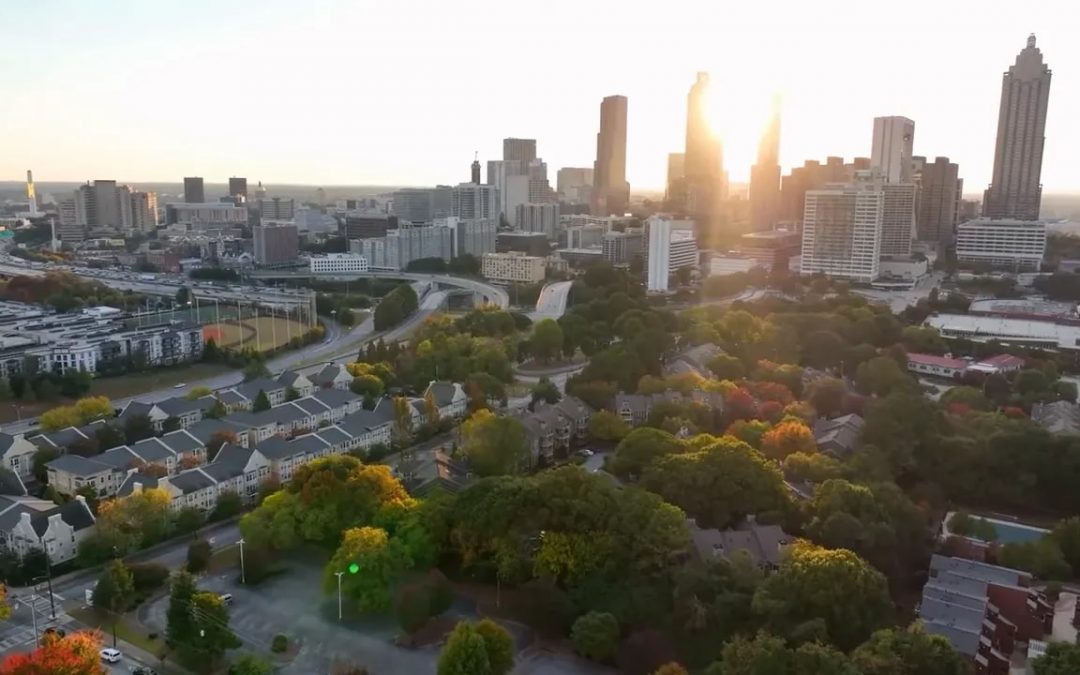
If you are weighing a move to Atlanta for work, family, lifestyle, or real estate, you need an honest picture of the good, the bad, and the occasionally frustrating. #MovingToAtlanta #NorthAtlantaSuburbs #AtlantaRealEstate #AtlantaSuburbs is not a one-size-fits-all decision. Metro Atlanta has incredible green space, a powerful economy, great neighborhoods, and endless things to do. It also has traffic, humidity, limited transit, and a housing search that can require patience.
After nearly 20 years living here, I genuinely love Atlanta. But I also think it is important to be clear about what day-to-day life actually feels like before choosing a neighborhood or buying a home.
The Challenges of Living in Metro Atlanta
1. Seasonal allergies can be brutal
Atlanta’s huge tree canopy is one of its best qualities, but it comes with a very real downside: pollen. Each spring, cars, patios, driveways, and outdoor furniture can get covered in that unmistakable yellow-green layer.
If seasonal allergies affect you badly, spend time here during spring and summer before committing to a move. Allergies hit me hard during my first few years in Atlanta, although I adapted over time. That will not be everyone’s experience, so it is worth testing for yourself.
2. Bugs are part of the deal
All of the trees and vegetation also mean plenty of insects. Cockroaches and mosquitoes are the biggest annoyances. Cockroaches are manageable when a home is properly sealed and treated, but mosquitoes are simply aggressive here.
A screened-in porch is one of the best features you can have in a Metro Atlanta home. It lets you enjoy the outdoors without becoming a mosquito buffet. If mosquitoes love you, bug spray needs to become part of your normal routine.
3. Summer humidity takes getting used to
Atlanta summers are hot and humid. It is not Florida or Louisiana level humidity, but it can still be a serious adjustment for anyone coming from a dry climate. Of all the weather-related complaints, humidity is probably the one that affects daily comfort the most.
You may adapt over time, but it is better to be realistic about it. Outdoor activities in the middle of summer often need to happen early in the morning, later in the evening, or with a willingness to sweat.
4. The housing market has plenty of disappointing options
There are beautiful homes throughout Metro Atlanta, but a home search can involve sorting through a lot of uninspiring inventory. You will see cookie-cutter layouts, neglected maintenance, outdated interiors, and poorly executed renovations at many price points.
That does not mean great homes do not exist. They absolutely do. The issue is that well-updated homes with strong layouts, good locations, and thoughtful renovations tend to attract competition. Go into your search with patience and be ready to move decisively when the right property comes along.
5. Gun culture may feel different from what you are used to
Georgia has a strong gun culture, and firearms are more visible in daily life than they are in some other parts of the country. For someone coming from the Northeast or another area where that culture is less common, it can be an adjustment.
This is not a statement that gun violence is inevitable or that gun ownership is inherently wrong. It is simply something to understand about the local culture. For some people it may be a positive, while for others it may be a drawback.
6. Traffic is a major lifestyle factor
Traffic is the criticism of Atlanta that everyone has heard, and it is deserved. Metro Atlanta is sprawling, heavily car-dependent, and built around major interstate corridors. The Downtown Connector, I-285 interchanges, and other highway junctions can be difficult at nearly any time.
If you work a typical weekday schedule, living close to your job should be one of your biggest priorities. A commute of more than 15 to 20 miles can take far longer than the distance suggests. When considering #MovingToAtlanta #NorthAtlantaSuburbs #AtlantaRealEstate #AtlantaSuburbs, do not choose a home based only on square footage or price. Think hard about how often you will need to drive and where you need to go.
7. Public transportation is limited
MARTA provides buses and rail service, and millions of people use it. But the heavy rail network is limited. To realistically live without a car, you need to be in a specific location near rail and have work, errands, and social activities that also fit that network.
For most of Metro Atlanta, car ownership is close to essential. Significant transit expansion does not appear likely in the near future, so it is best not to assume this issue will be solved soon.
8. Growth is slowed by anti-urban attitudes
Atlanta residents often complain about traffic, expensive housing, and poor walkability. Yet proposals that could help, including denser zoning, additional housing, and expanded transit, frequently face opposition.
The Atlanta BeltLine is a major improvement and a genuine breath of fresh air. Still, it illustrates the challenge. The original vision included light rail, while some people who enjoy the BeltLine now oppose rail along it. Conflicting priorities can make meaningful progress feel painfully slow.
9. The social culture can feel independent
There are many genuinely great people in Metro Atlanta, including people who become lifelong friends. But the general social mentality can feel more independent and less aware of how personal choices affect others.
A small but frustrating example is drivers stopping in the middle of a road to talk, take a call, or look at a phone, expecting everyone else to go around them. It is not something that will define your daily life, but it does capture a local feeling of, “I am doing my thing, so work around me.”
10. Walkability is the exception, not the default
Atlanta is not broadly walkable. It is a spread-out metro built around driving, and there are areas inside and outside the Perimeter without sidewalks at all.
There are exceptions. Midtown is probably the closest thing Atlanta has to a compact, walk-everywhere neighborhood. The BeltLine connects several intown areas for walking, biking, and scooters. Many suburbs also have walkable downtown districts. In North Fulton, the AlphaLoop helps connect Avalon, downtown Alpharetta, and surrounding destinations.
If walkability is a must-have, focus your search on specific locations rather than assuming an entire area will be pedestrian-friendly. For more neighborhood ideas, browse the Alpharetta neighborhood guides and other local community resources.
11. Daily biking can be unsafe
Bike lanes are improving in parts of the city, but Metro Atlanta is not consistently safe or convenient for everyday cycling. Many routes move from a protected lane into high-speed traffic or major roads with little room for bicycles.
There are excellent trails for recreational riding, hiking, and outdoor exercise. But if your plan is to bike to work or run regular errands by bicycle, choose your location very carefully. Driver awareness and infrastructure are not where they need to be for most daily bike commutes.
12. The food scene can be overpriced and overly corporate
Atlanta has some excellent restaurants, but it is also easy to spend a lot of money on an underwhelming meal. In trendier neighborhoods, you may find restaurants charging New York or Los Angeles prices without consistently delivering the same variety, quantity, or quality.
There is also a lot of corporate sameness. New developments often bring the same collection of chains instead of locally owned spots. Once you learn where to go, you can eat very well. But Atlanta would not be my pick for one of the country’s top food cities overall.
What Makes Atlanta a Great Place to Live
1. Four seasons with generally mild weather
Atlanta has four distinct seasons, but winters are short and relatively mild. Summer gets hot, no question, but spring and fall are outstanding. With more than 200 days of sunshine a year, there are long stretches when the weather is simply easy to enjoy.
If you want seasons without dealing with severe Northeastern winters, Atlanta can be a very comfortable middle ground.
2. Nature is everywhere
For outdoor people, Metro Atlanta is a fantastic place to live. You have the Chattahoochee River, Lake Lanier, the Blue Ridge Mountains, hiking, camping, kayaking, canoeing, trails, parks, and green space throughout the region.
You are rarely far from a place to get outside, whether you live intown or in one of the suburbs. This access to nature is one of the biggest reasons Atlanta has grown on me over the years.
3. A diverse and resilient economy
Many people move here for a job, promotion, or career change. Metro Atlanta’s economy is not dependent on a single industry. It has major activity across healthcare, banking, television and film, energy, information technology, higher education, and more.
There are more than 25 Fortune 1000 companies headquartered in the Atlanta area, including at least 19 Fortune 500 companies. That economic diversity is a major advantage for career opportunities and for long-term confidence in the local real estate market.
Consult with Marc for free!
4. Hartsfield-Jackson makes travel easy
Hartsfield-Jackson Atlanta International Airport is a major Delta hub and one of the busiest airports in the world. If you travel often for work, family, or fun, that matters a lot.
There are numerous direct flights to destinations that may require connections from other cities. The Plane Train also makes moving between terminals more manageable than people often expect from such a large airport. It is not perfect, but it ranks better than many airports I have used.
5. Major natural disasters are not a constant concern
Metro Atlanta does have severe weather, occasional tornadoes, heavy rain, and flooding concerns in certain locations. But compared with places that regularly face major hurricanes, earthquakes, wildfires, or other disasters, preparing for a catastrophic event is not a central part of homeownership here.
For many people relocating from Florida, California, or other disaster-prone areas, that peace of mind is meaningful.
6. Buford Highway is a food lover’s treasure
Buford Highway is one of the best things about Metro Atlanta. Starting around Doraville and Chamblee and running north toward Duluth, it is packed with independent Latin American and Asian restaurants that offer flavor and value.
This is where you go to escape the corporate chains and overpriced concepts. If you love diverse cuisines, learn the Buford Highway corridor early and visit it often.
7. The tree canopy creates a unique atmosphere
Atlanta is a major metropolitan area where trees are everywhere. That canopy creates a calmer, greener, more peaceful feeling than many other large cities. It is also why parks, trails, and green space are so easy to find.
Yes, the trees bring pollen and bugs. I would still take Atlanta’s greenery over a concrete-heavy city any day.
8. There is always a festival or event nearby
Atlanta is excellent for people who enjoy getting out and being around other people. The calendar is packed with events of all sizes, including Music Midtown, Pride Festival, Dragon Con, Shaky Knees, Shaky Beats, food and wine events, jazz festivals, film festivals, and the Little Five Points Halloween Parade.
No matter the season, there is usually something going on. That variety makes it easy to find a community and build a social life around the things you enjoy.
9. Metro Atlanta is genuinely diverse
Metro Atlanta has a broad mix of ethnic backgrounds, faiths, cultures, and communities. It has one of the country’s largest African American populations, strong LGBTQ communities in certain areas, large Latin American communities, and many Asian communities, particularly in Gwinnett County.
You can find major Brazilian communities around Marietta and Ethiopian communities around Clarkston, among many others. Metro Atlanta also has a wide range of religious communities, including one of the largest Hindu temples in the world.
No place is perfect, and ignorant people exist everywhere. But most people can find neighborhoods and communities where they feel accepted and at home. For additional area-specific guidance, explore the Atlanta suburbs library.
10. Atlanta supports entrepreneurship
Atlanta has a strong culture of people building businesses, working independently, and connecting with other entrepreneurs. You will notice it when restaurants and coffee shops are packed in the middle of a weekday.
Some people make fun of the idea that nobody has a “real job” here. I actually love the entrepreneurial energy. If you want to start a business or build a career outside a traditional corporate structure, Atlanta can be an incredibly supportive place to do it.
11. There is beautiful architecture if you know where to look
The housing market can be frustrating, but some of Atlanta’s homes are truly special. One of my favorites is the 100-plus-year-old Craftsman architecture found on the Westside and in the Tri-Cities of South Atlanta.
These homes can include:
- Wide front porches
- Heart pine floors
- Ten-foot-plus ceilings
- Oversized baseboards and crown molding
- Stained-glass details
There are also excellent mid-century modern homes in places like Smoke Rise and Panthersville. Some have suffered from poor renovations, but others have been preserved or thoughtfully updated. The key is knowing where to look, being patient, and recognizing quality when you find it.
12. Atlanta real estate can be a strong long-term investment
I am very bullish on Metro Atlanta’s long-term growth. The diverse economy, mild climate, airport access, expanding population, and broad range of neighborhoods all support demand for housing over time.
Prices have risen substantially, and finding a cash-flowing rental or multifamily property is harder than it once was. Large investment firms purchasing homes have also made affordability more difficult. Still, a primary home should be evaluated as an investment because it is one of the biggest financial decisions most people will make.
If you buy in an established neighborhood, avoid overpaying, and choose a home in excellent condition, real estate here can be a powerful long-term asset. That is a major part of why #MovingToAtlanta #NorthAtlantaSuburbs #AtlantaRealEstate #AtlantaSuburbs remains such an important conversation for buyers and investors alike.
Is Atlanta the Right Fit for You?
Atlanta is a great fit if you value career opportunity, greenery, diverse communities, festivals, airport access, outdoor recreation, and a wide range of housing options. It can be less ideal if you need excellent public transit, broad walkability, safe daily bike routes, low humidity, or a short commute from a far-flung suburb.
Be honest about your non-negotiables. Spend time in the neighborhoods you are considering, drive the routes you would actually use, and visit during the season that concerns you most. The right neighborhood can make all the difference in your Atlanta experience.
For the right person, Metro Atlanta is not just a place to live. It is a place to build a career, find community, enjoy the outdoors, and invest in the future.